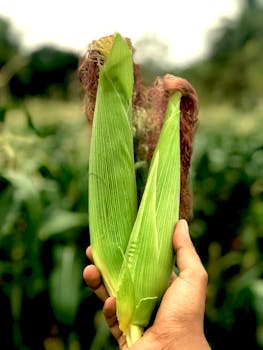
Welcome to our Summer Soul Garden, your homegrown sanctuary where heritage, health, and cooperative economics bloom together. Today, we’re talking sweet corn growing tips. Corn: that golden, juicy yum that speaks to our roots, nourishes our bodies, and feeds our community.
Sweet Corn & Ancestral Roots
Corn (or maize) isn’t just a veggie—it’s an ancestral gift. Across many African cultures, corn symbolizes abundance, fertility, and ancestral connection. In East Africa, it’s a staple porridge (think ugali), while in Ghana, it’s turned into banku and kenkey to pair with rich, peppery soups. In Haiti, there’s mayin moulen. These foods anchor our traditions and echo within our own kitchens.
In America, sweet corn became part of soul food not just for its flavor but because it literally remade our collective table. Cornbread stood in for fufu when yams weren’t available, fitting into our cooking with the same nourishing energy our ancestors carried across the diaspora. When you’re growing sweet corn, you’re not just growing food—you’re reclaiming cultural memory.
Why Growing Sweet Corn Matters for Self‑Determination
When we grow our own corn, we’re nourishing our bodies with fresh, pesticide-free goodness—but we’re also nurturing self-sufficiency. There’s something powerful in planting corn kernels, watching green stalks rise, and harvesting ears of sunshine. It reminds us that we can cultivate our own nourishment—and our own futures.
Picking the Right Sweet Corn Varieties
Not all corn is created equal! Here are three sweet corn types to consider:
Standard Sugary (su): Classic, flavorful, and perfect for eating right off the cob. Open-pollinated varieties like Early Golden Bantam or Golden Cross Bantam are beloved heirlooms with rich, old-school taste.
Sugary Enhanced (se): These stay sweet a little longer and can handle a short delay between harvest and table. Great for sharing with friends—or enjoying the next day.
Supersweet (sh2) and Synergistic/Augmented (sy, shA): Ultra-sweet, longer shelf life, but require careful spacing from other corn to avoid cross-pollination. For home gardeners, keeping supersweets separate (25 or more feet or staggered planting time) is key to preserving sweetness.
Tips for Growing Sweet Corn Like a Pro
Timing & Soil
Plant only when the soil is warm—ideally 60 to 65°F or above. Corn loves sunshine and deep, fertile soil with a pH of 6.0 to 7.0.Planting Blocks, Not Lines
Corn needs wind to pollinate, so plant it in blocks of four or more short rows, spaced 30 to 36 inches apart, with seeds spaced eight to 12 inches within rows.Feed & Water Religiously
Corn is a heavy feeder. Mix compost into the soil before planting, gently mix a little nitrogen (fish emulsion is one of our faves) into the soil when stalks reach a foot tall, and keep the soil evenly moist—about an inch of water per week helps fatten up the ears nicely.Watch for Pests & Give Protection
Use row covers to protect young seedlings from birds or bugs. Remove stalks after harvest to disrupt pests like corn borers and earworms. Plant marigolds, nasturtiums, or beans and squash (the “Three Sisters”) nearby to boost pollination and pest control naturally.Harvest at the Sweetest Moment
Your cue? Brown silks and firm, green husks. Press on a kernel—if its juices are milky, it’s ready; if clear, give it a little more time.
The Power of Growing Sweet Corn
Quick story. Last summer, I planted Early Sunglow and Nirvana sweet corn varieties in my backyard patch. Watching those green stalks soar and hearing the breeze rustle through the stalks like a wind chime was wonderful. One morning, I found perfect ears glistening in the sunshine—so sweet and juicy. I was ear to ear smiles. When we finally harvested and ate them, my daughter noted how homegrown corn just straight up tasted better. I though about it and responded, “Because it’s grown with intention, with care, and with love. When we grow our own food, we’re growing our power.”
Cook & Share
Invite a few friends, bring your freshly harvested ears, and celebrate your corn with a block party-style boil. Serve with fresh lime, chili powder, or homemade corn salad. As you bite into that sweet kernel, remember: you’re honoring African foodways, cultivating your health, and growing your freedom—with every harvest.
Let’s keep growing together
Share your corn-growing goals, photos, and successes with us at Summer Soul Garden. Here’s to filling our plates—and activating our power—one sweet ear at a time.
